Why it is built this way
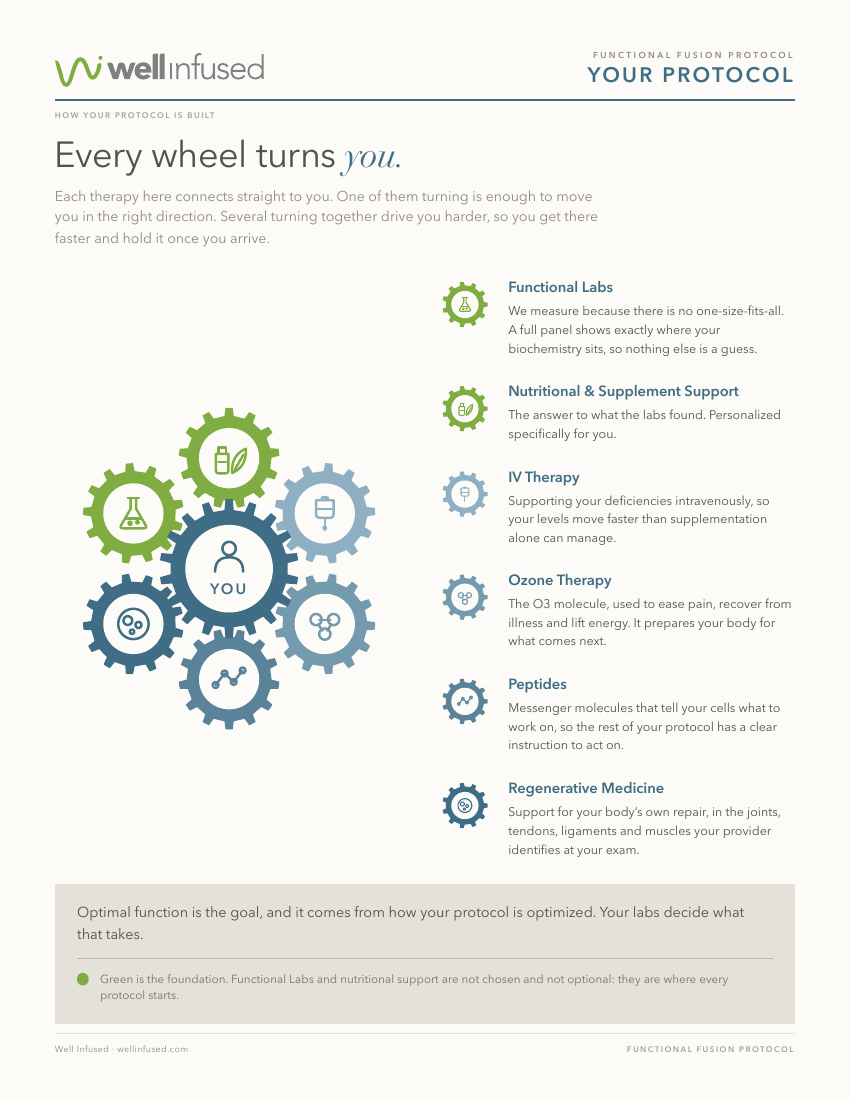
The point of building it this way is that care gets added when the labs call for it, and a patient can see why. The wheel does the work the formulary cannot: it shows that the foundation alone moves someone in the right direction, and that several therapies turning together move them faster. That is a clinical argument made visible, and it is what makes the conversation about the whole protocol rather than one item at a time.
For the provider
Both of these are internal. They stay in the clinic.
The Formulary
Everything the clinic offers, and what each thing is for.
What it is
Four sheets covering the whole menu of care: the foundation, hormones and peptides, infusions and procedures, and memberships. It is the provider's reference for what exists and what it treats, grouped the way a protocol is actually built.
How it is used
Open it at the lab review. It answers “what do we have, and what is it for” so the provider can build a protocol from findings rather than memory. It is not a patient handout and not a list anybody chooses from: it carries no prices for that reason, and those live on the quick guide instead.
When it changes
It changes as products are added. Send anything new and it goes in, and a new version comes back.
Printing
Print at the office. It will keep changing, so there is no point having it printed properly.
Why it is not on this page
This one carries clinic pricing and is an internal document, so it is not published here. The PDF is attached to the email this link came with.
The Membership Quick Guide
Every price for the front desk, and what each membership adds.
What it is
Four sheets: pricing the desk is asked for all day, then the membership ladder, where each tier lists only what it adds over the one before it, then a checkout lookup by tier so the desk finds a service and reads across to the member's tier.
How it is used
It sits at the desk. Version 2 is new: the Comprehensive + Pellet Hormones tier is out, leaving three memberships. Where the sources disagree, or where something has not been decided, it says so on the last sheet rather than printing a number that looks settled.
When it changes
Version 1.1 still exists and still builds, if the original is wanted.
Printing
Print at the office, same as the formulary. Prices move.
Why it is not on this page
This one carries clinic pricing and is an internal document, so it is not published here. The PDF is attached to the email this link came with.
For the patient
These two are the ones a patient sees and takes home.
The Prescription Pad
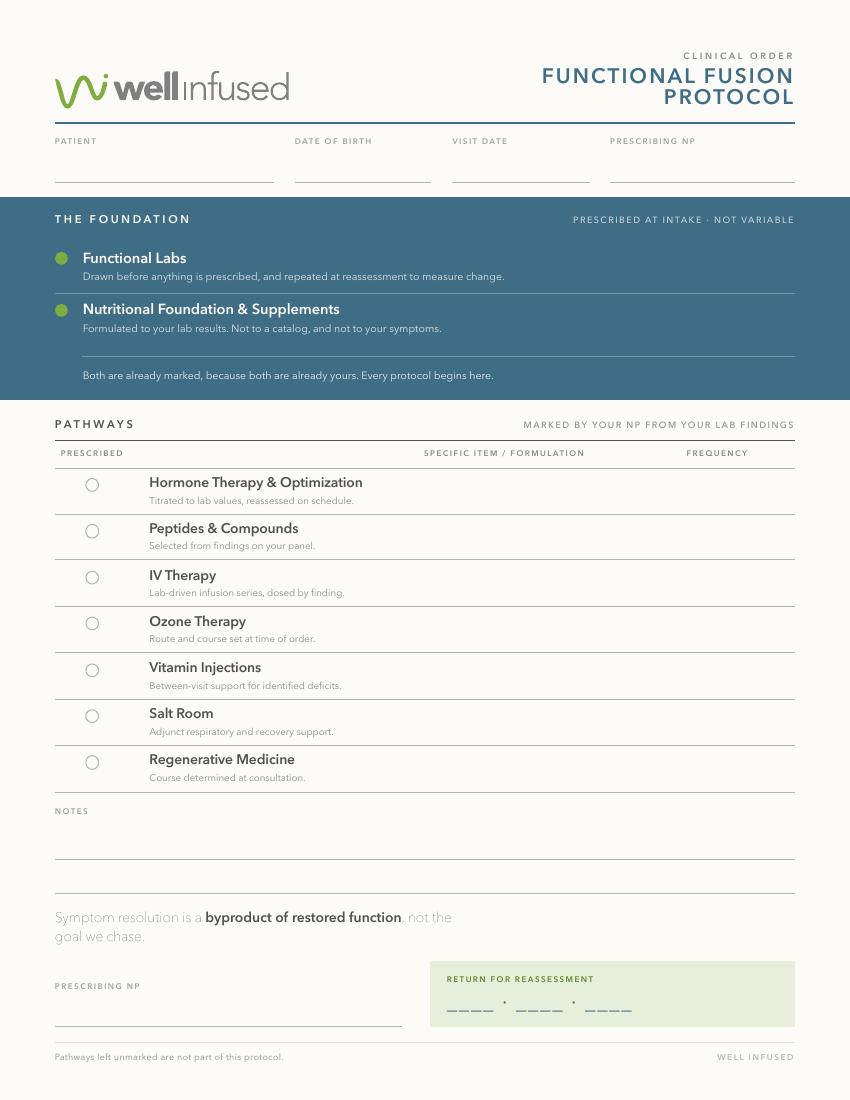
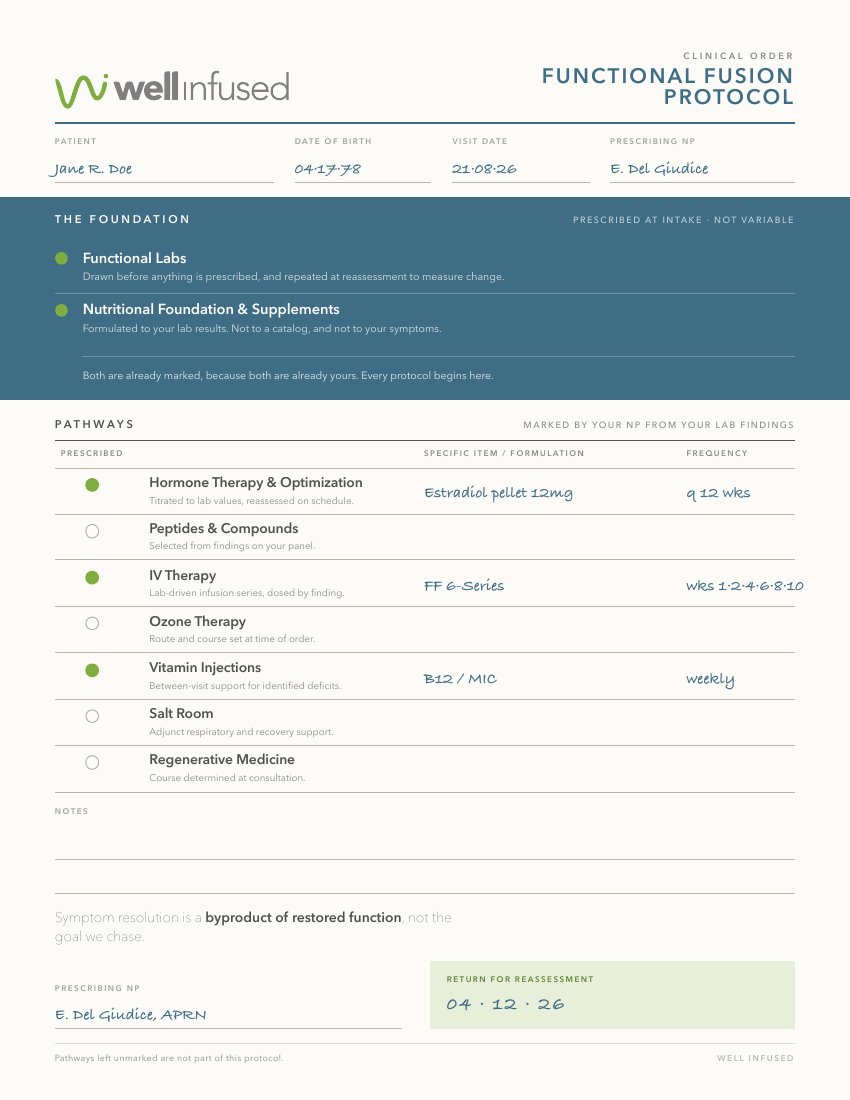
One sheet. The provider fills it in during the visit.
What it is
The clinical order, and the thing the patient leaves holding. Every pathway the clinic offers is on it. The provider marks what the labs call for, writes the detail on the line beside it, and sets the return date.
How it is used
Filled in with the patient, in front of them, during the visit. What is marked is prescribed; what is blank is not, and the sheet says so in print, so nothing is ambiguous later. The foundation is printed as already marked, because it is not chosen.
When it changes
Settled. This is the final design and it should not need to change.
Printing
Send this one to a printer, on good stock. The design is settled, so it can go now. It is handled at every visit and the patient leaves holding it, so it should not feel like something run off at the desk.
Your Protocol
How the protocol works, explained in one picture.
What it is
Six wheels, each a therapy, every one of them meshed with the patient at the center. Any single wheel turns them. More of them turning drives them harder.
How it is used
Handed to the patient and talked through, alongside the pad. It is the answer to “why are you recommending more than one thing?”: not because more is better to sell, but because the labs indicate it and several therapies working together move someone faster than the foundation can alone.
When it changes
Draft for Shawn and Staci to react to. Nothing is printed until it is agreed.
Printing
Printer and good stock, same as the pad, once the two of you agree it. It goes into a patient's hands and gets talked through, so it should feel like a piece of the practice rather than a handout.
Adding to it, and printing it
The formulary will change often, so it gets printed at the office. It is built from a list, so anything new goes in and a fresh version comes back: send the product and what it is for. The quick guide is the same whenever a price moves. Neither is worth sending to a printer, because both will be out of date by the time they arrive.
The prescription pad and Your Protocol are the two that get properly printed, on good stock, by a printer. The pad is settled and can go now. The wheel goes as soon as the two of you agree it. Those are the pieces a patient handles, so they are the ones worth the paper.